
Tylenol, Ibuprofen, and Aspirin: When to Take Them, How, and Why—and Why Prevention Really Makes a Difference
Francesco PautassoShare
Every day, here at the pharmacy, I find myself answering questions that seem simple but hide a complexity worth exploring: "Francesco, should I take Tylenol or Ibuprofen for my headache?" , or "I have a fever, can I take Aspirin?" , or even "Can I alternate them?" . These are legitimate questions, and the answer—as often happens in medicine—is: it depends .
In this article, I want to shed light on these three medications we all have at home, explain the real differences between them, and then take a step back to talk about something I find even more important: prevention . Because proper treatment is essential, but avoiding getting sick is even better.
The three protagonists: what they are and how they work
Paracetamol (Tachipirina and others)
Paracetamol—marketed in Italy primarily as Tachipirina —is probably the most widely used drug in the world. It acts centrally on the nervous system, reducing the perception of pain and lowering elevated body temperature. Its exact mechanism is still being studied, but we know it doesn't significantly reduce inflammation : it's an analgesic and antipyretic, not an anti-inflammatory.
When to use it: headache, fever, mild to moderate pain (toothache, muscle, joint pain), menstrual cramps. It is the first-line drug during pregnancy (always under medical advice), in children, the elderly, and those with gastric problems.
Standard dose for adults: 500 mg–1 g every 6–8 hours, not exceeding 4 g in 24 hours . This limit is crucial: paracetamol in excessive doses is toxic to the liver. Those who regularly consume alcohol or have liver problems should be especially careful.
Caution: Many over-the-counter medications (cough syrups, cold and flu preparations) already contain paracetamol. Always read the label before combining them.
Ibuprofen (Moment, Brufen, Nurofen and others)
Ibuprofen belongs to the NSAID (Non-Steroidal Anti-Inflammatory Drug) family. Unlike paracetamol, it works by inhibiting the COX-1 and COX-2 enzymes, responsible for the production of prostaglandins: the molecules that mediate pain, fever, and especially inflammation .
This makes it more effective than paracetamol in all situations involving an inflammatory component: joint pain, tendonitis, toothache with swelling, severe menstrual pain, and acute lumbago.
Standard dose for adults: 200–400 mg every 6–8 hours, not exceeding 1200 mg/day (without a prescription). With a prescription, it can be increased to 2400 mg/day under controlled conditions.
Important contraindications: gastric problems or peptic ulcers (NSAIDs irritate the gastric mucosa—if you have a sensitive stomach, always take it with food or with a gastroprotective medication); renal insufficiency; pregnancy (especially after the sixth month: contraindicated); patients with cardiovascular disease or hypertension (use should be discussed with your doctor); children under 6 months.
Acetylsalicylic acid (Aspirin and others)
Aspirin was the go-to painkiller for decades, but its role has changed. It also belongs to the NSAID family, with a mechanism similar to ibuprofen, but with a unique characteristic: it irreversibly inhibits platelets , reducing the blood's ability to clot. This effect persists for the lifespan of the platelet (about 7-10 days).
When to use it as an analgesic/antipyretic: headache, fever, muscle aches. However, for these purposes, paracetamol or ibuprofen are generally preferred today, as they have a better safety profile for occasional use.
Its primary use today: At low doses (100 mg/day), aspirin is prescribed as an antiplatelet agent in the secondary prevention of cardiovascular events (heart attack, stroke) in at-risk patients. This is a chronic treatment, which should only be used under medical supervision .
Contraindications: gastric ulcer, salicylate allergy, children and adolescents with viral diseases (risk of Reye's syndrome—it is important to remind parents of this), pregnancy, coagulation disorders.
Can they be alternated or combined?
This is one of the most frequent questions I receive. The short answer is: paracetamol and ibuprofen are safe, but not aspirin with other ingredients (unless specifically indicated by a doctor).
Paracetamol and ibuprofen have different mechanisms of action and do not overlap in their risks, so some studies show that alternating them (for example, paracetamol every 4 hours and ibuprofen every 6 hours, staggered) can improve the control of high fever or severe pain. However, this strategy should be adopted with caution and preferably after consulting a doctor or pharmacist , as it increases the risk of losing count of doses.
Two NSAIDs should never be combined together (e.g. ibuprofen + analgesic aspirin), because the gastric and renal effects are added without significant additional benefits.
Fever: when to reduce it and when not to?
A point on which there is much confusion. Fever is not a disease , it is our body's defensive response: temperatures between 37.5°C and 38.5°C often do not require pharmacological treatment in healthy adults, because they help the immune system fight the infection.
When to intervene: fever higher than 38.5–39°C in adults, or with symptoms that make it poorly tolerated (severe headache, chills, severe muscle pain); any fever in children under 3 months (consult your pediatrician immediately); fever persistent for more than 3 days (medical advice required); patients with heart disease, epilepsy, or a history of febrile convulsions (lower the fever sooner).
From treatment to prevention: the qualitative leap
So far, we've talked about managing symptoms. But in the pharmacy, I often tell customers something simple: the best medicine is the one you shouldn't take . And this brings us to the topic of prevention, which becomes crucial during the cold season—or in times of stress and fatigue.
The immune system is not an on/off switch: it is a complex ecosystem that thrives on lifestyle, diet, sleep, and, when necessary, targeted support.
Here's what I often recommend to our clients, based on their needs:
For the immune system
Aboca's Immunomix Advanced —available in capsules or syrup—is one of the most comprehensive herbal remedies I have in my pharmacy. The two formulations have different compositions: the capsules contain echinacea, elderberry, ginger, and siberian ginseng, with the latter adding a tonic effect useful for tiredness and exhaustion; the syrup contains echinacea, elderberry, royal jelly, and mallow, with a pleasant flavor that makes it suitable for children ages 2 and up. Both are 100% natural, free from synthetic substances. I recommend it during the change of seasons or during periods when the immune system is under pressure, for cycles of at least 20 days.
Zarbee's Immune Defenses is a syrup I appreciate for its quality and simple formula: it contains pure honey (48%), echinacea root extract, vitamin D, and biotin. Vitamin D contributes to the normal function of the immune system; biotin supports the health of the throat and respiratory tract mucosa, which are the body's first line of defense against bacteria and viruses. It is free of artificial colors and flavors, lactose-free, and suitable for vegetarians. Suitable for adults and children aged 12 and up.
DeKoro Spray by Named is an oral spray supplement containing vitamin D3 and vitamin K2 (menaquinone-7). The two vitamins work synergistically: D3 contributes to the normal function of the immune system and the metabolism of calcium and phosphorus; K2 supports the maintenance of normal bone structure. The microemulsion spray technology ensures superior absorption compared to traditional fat-soluble vitamin D capsules. Convenient and quick, I recommend it for anyone who wants to meet their daily vitamin D needs, especially during the winter months when sun exposure is insufficient.
For those who often have respiratory problems
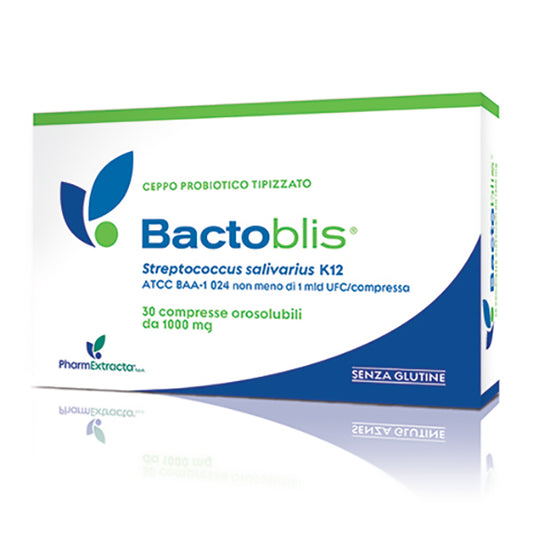
Bactoblis – Streptococcus salivarius K12 (30 orodispersible tablets) is one of the products I enjoy discussing with customers because its mechanism is truly fascinating from a scientific perspective. The Streptococcus salivarius K12 strain is an oropharyngeal probiotic: naturally present in the human oral microbiota, it produces two bacteriocins (Salivaricin A2 and B) capable of inhibiting the growth of Streptococcus pyogenes and other pathogens responsible for pharyngotonsillitis and otitis media. It colonizes the nasopharynx and adenoids as early as the third day of treatment and, according to literature, can also stimulate the local production of interferon gamma. An Italian meta-analysis analyzed 7 clinical studies on children and adults, highlighting a significant reduction in episodes of pharyngotonsillitis and acute otitis media, as well as a reduction in the use of antibiotics. The results are robust, although not all studies are uniformly consistent. I especially recommend it for those who tend to suffer from recurrent pharyngitis or tonsillitis; the orodispersible formulation makes it convenient for adults and children. It should be suspended during antibiotic therapy and resumed at the end of the course.
For the intestinal microbiota and female intimate well-being
Lautoselle orodispersible granules are a Bromatech supplement based on lactic acid bacteria and vitamin C, indicated for rebalancing intestinal flora after antibiotics, for digestive disorders, or to support healthy skin, teeth, and gums. The convenient orodispersible sticks, which dissolve directly in the mouth, make them easy to take, even for those who are always on the go.
Crispact Stickpack Orosoluble is a probiotic specifically designed for the well-being of female vaginal flora: it contains Lactobacillus crispatus M247, one of the most representative lactobacilli of the healthy vaginal microbiota, with 20 billion CFU per stick. I recommend it for clients with recurrent episodes of bacterial vaginosis or candidiasis, or for anyone who wants to support intimate balance naturally. It is gluten- and lactose-free.
For vitamin deficiencies
Solgar Liquid Vita D3 is my favorite choice for correcting vitamin D deficiency, which is extremely common in Italy—especially in Turin, with its foggy winters. The liquid form ensures excellent bioavailability and the flexibility to easily adjust the dose. Vitamin D isn't just important for bones: it plays a fundamental role in modulating the immune system.
Solgar Ester-C Plus This is the form of vitamin C I prefer to recommend for ongoing supplementation. Ester-C is a non-acidic form of calcium ascorbate, with superior gastric tolerability compared to traditional vitamin C and prolonged tissue retention. Ideal for those with sensitive stomachs.
For those who need energy and recovery
Sustenium Plus 50+ is specifically formulated for adults over 50, an age group in which energy metabolism and nutritional needs change. It contains the Actiful complex—a combination of orange bioflavonoids and pomegranate extract with antioxidant properties—along with magnesium, folic acid, niacin, and B vitamins (B2, B6, B12), which contribute to the reduction of tiredness and fatigue and normal energy metabolism. I often recommend it to clients over 50 who feel fatigued and want to regain energy. The product is taken in two-month cycles with a 30-day break.
Ivuxur Food Supplement in Sachets is a product I frequently recommend to our customers: it is a specific supplement for urinary tract health , based on D-mannose, cranberry extract (PACRAN®, rich in proanthocyanidins), bearberry, and zinc. D-mannose is a simple sugar not metabolized by the body and excreted in urine, reducing bacterial adhesion to the bladder wall; cranberry and bearberry support urinary tract function; zinc contributes to normal immune function. I use it to support the management and prevention of recurrent episodes of cystitis, particularly in women.
Polase Sport is a hypotonic energy-salt supplement drink designed for athletes, but I also recommend it for those experiencing heavy sweating, fever, or convalescence. It contains magnesium and potassium for normal muscle and nerve function, fructose and maltodextrin for energy replenishment, and vitamins C and E with antioxidant properties. A common mistake is forgetting that fever and prolonged sweating cause the loss of important electrolytes: replenishing them supports recovery.
For pregnancy
Inatal Duo It's a probiotic supplement in sachets designed for pregnant women and the postpartum period. It contains two specific probiotic strains— Enterococcus faecium L3 and Bifidobacterium animalis subsp. lactis BB12—which promote the rebalancing of the intestinal microbiota, contributing to the digestive health typical of pregnancy (bloating, constipation) and the prevention of gynecological infections. It's not a multivitamin: it's a specific probiotic to be taken alongside the vitamin supplements prescribed by your gynecologist. I particularly recommend it from the second trimester onwards.
A final piece of advice, from a pharmacist
The pharmacy isn't—or shouldn't be—just the place where you go to pick up a prescription or buy a painkiller when you're feeling sick. It's a healthcare facility where you can receive personalized advice from professionals who know your story.
If you're unsure which medication to take, if your symptoms persist, or if you're taking other medications and want to know if there are any interactions, come talk to us or contact us through farmacietorino.com . That's what we're here for.
And remember: self-medicate consciously, but not blindly. There's a big difference.